
Why Living Compost Feeds More Than Plants
What Makes Compost “Living”?

Most people think compost feeds plants. But truly living compost feeds entire ecosystems from microbes and fungi to the communities that depend on healthy soil.
At Generation Soil, we define living compost not as a product, but as a process. It’s teeming with bacteria, protozoa, nematodes, and fungal networks, the foundation of soil fertility. This microbial life drives nutrient cycling, suppresses disease, and helps plants form deeper, more resilient relationships with their environment.
When we return this compost to the earth, we’re not just adding nutrients; we’re reintroducing life.
Related reading: The True Value of Living Compost: Why It’s Worth It
From Waste to Web: Compost as Connection

In most modern cities, organic matter follows a linear path from food to bin to landfill or anaerobic digestion. The nutrients are burned, processed, or lost.
Living compost reverses that flow. Through local, decentralised composting, waste becomes a living bridge that reconnects:
Households with the land that feeds them
Communities with each other
Urban life with the soil systems beneath it
This is what we’re building through the Bristol Living Compost Project, an urban circular system that turns kitchen scraps into fertile soil right where they’re produced.
Every litre of compost we create regenerates local ecosystems, reduces emissions, and supports a growing network of schools, gardens, and small farms.
Also read: From Surabaya to Bristol: What the UK Can Learn from Community Composting Success Stories
The Invisible Workers Beneath Our Feet

Healthy soil is alive, and those tiny organisms are its engineers. Living compost introduces:
1️⃣ Microbes
Bacteria and actinomycetes decompose organic matter and release plant-available nutrients.
2️⃣ Fungi
Mycorrhizal fungi create vast underground networks that help plants exchange nutrients and water.
3️⃣ Protozoa and nematodes
These microscopic grazers feed on bacteria, keeping populations balanced and releasing nitrogen in plant-accessible forms.
4️⃣ Humus builders
Microbes convert organic matter into humic compounds, improving soil structure, water retention, and carbon storage.
Together, this community forms what soil scientists call the Soil Food Web, the living infrastructure that sustains every ecosystem.
Beyond Soil Health: Feeding People and Planet
When we talk about regeneration, it’s not only ecological, it’s social.
Living compost builds resilience at every level:
Environmental: Restores carbon, water, and nutrient cycles.
Economic: Reduces waste management costs and creates green jobs.
Social: Connects communities through shared purpose and circular practice.
In Bristol, each compost hub becomes a micro-centre of regeneration, producing living compost, hosting workshops, and nurturing partnerships with schools, markets, and growers.
Discover our Workshops to learn how to compost at home or start your own community hub.
How to Tell If Your Compost Is Alive

A living compost pile has its own pulse. You can see, smell, and feel the difference.
Look for:
✅ A sweet, earthy aroma (not rotten or sour)
✅ Visible fungal strands or white filaments
✅ Worms and other decomposers
✅ Moist but crumbly texture
Dead compost feeds plants for a season. Living compost feeds ecosystems for generations.
Want to make your own? Start with our guide: Transform Your Food Waste into Fertile Soil with Bokashi Composting
Why Living Compost Is a Climate Solution
Composting is often framed as “waste management.” But it’s really carbon management.
Living compost locks carbon into soil instead of releasing it as methane in landfill. A single tonne of compost can store up to 250 kg of carbon, equivalent to the yearly emissions of a small car.
By regenerating soils, we help cities adapt to climate stress, improving flood resilience, cooling microclimates, and enhancing biodiversity.
Explore our feature: When Organic Food Became a Threat and Why It Still Matters
Join the Regeneration
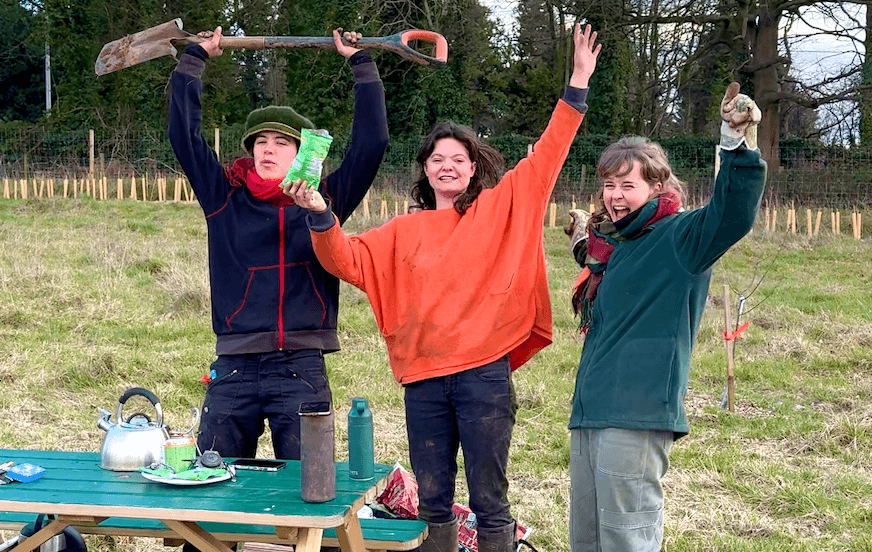
When we say living compost feeds more than plants, we mean it feeds relationships, resilience, and hope.
Through every bucket collected and every handful returned to the earth, we’re rewriting what waste means, and what growth can look like.
👉 Join us:
Key Takeaway
Living compost is not an input; it’s a living partnership.
When we nurture soil life, we nurture the life that sustains us.


Comments