
Member Spotlight: The Old Drumbank Studios
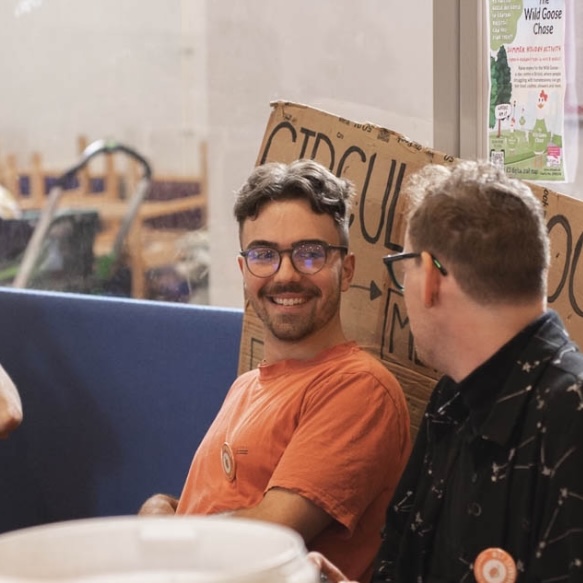
Across Bristol, food scraps move quietly through kitchens, cafés, and workplaces every day. Most of the time they disappear into bins and are taken far away, processed somewhere unseen.
Keeping Food Waste Local in Bristol
At The Old Drumbank Studios, things work a little differently.
Located in a converted industrial building that now hosts artists’ studios alongside an on-site café and shop, the space produces a steady stream of coffee grounds and food scraps. Rather than leaving the neighbourhood, those nutrients now stay close to home through the Bristol Living Compost Project.

The Bristol Living Compost Project works with households, cafés, and small organisations across the city to keep food waste local. Instead of being transported out of Bristol, food scraps and coffee grounds are transformed into living compost that returns to gardens, allotments, and growing spaces throughout the city.
As the team explain:
“We’re very proud to work with Generation Soil here at The Old Drumbank Studios. It just makes total sense for all of the food waste (mainly coffee grinds!) produced by our on-site café and shop, as well as the artist studios upstairs, to stay within the local ecosystem.
It’s a very nice feeling to know it will ultimately return to outdoor and growing spaces across the city, and Alex and the team are doing a fantastic job.”
How Coffee Grounds Become Living Compost
What happens next is simple.
Food scraps and coffee grounds are collected
Materials enter the compost system
Microbes and fungi transform the organic matter
Living compost returns to Bristol soils
The food scraps and coffee grounds collected from the building enter the Generation Soil compost system. Over time, with the help of microbes, fungi, and careful composting practice, they become living compost.
That compost then returns to soil across Bristol:
allotments
community gardens
growing spaces
market gardens

Instead of nutrients leaving the city, they circulate locally.
This kind of partnership is exactly what the Bristol Living Compost Project was designed for. Not large-scale waste processing, but
where people can see where their food waste goes and what it becomes.
A café’s coffee grounds become soil.
That soil grows food.
And the cycle continues.
Spaces like The Old Drumbank Studios show how easily these local nutrient loops can form when kitchens, workplaces, and growing spaces are connected.
Sometimes it starts with something as simple as a bucket of coffee grounds.
About the Bristol Living Compost Project
The Bristol Living Compost Project keeps food waste local by turning it into biologically active compost that regenerates soil. Households, cafés, studios, and small businesses across the city take part, helping nutrients return to gardens, allotments, and growing spaces throughout Bristol.


Comments