
Soil Is a Living System, Not a Resource

For most of modern history, soil has been treated as a resource.
Something to extract from.
Something to manage.
Something to optimise.
In agricultural policy, soil is often described in the same language as fuel, timber, or minerals. A resource to be used efficiently.
But soil does not behave like a resource.
It behaves like a living system.
And when we misunderstand that difference, entire food systems begin to break down.

The Misunderstanding Beneath Our Feet
If soil were simply a resource, managing it would be straightforward.
Add fertiliser when nutrients run low.
Irrigate when crops need water.
Control pests when they appear.
This approach has shaped industrial agriculture for decades.
For a while, it seemed to work.
Yields increased. Food became abundant. Production intensified.
But beneath the surface, something else was happening.
Soil organic matter was declining.
Microbial diversity was shrinking.
Soil structure was weakening.
The problem was not that soil had been used.
The problem was that soil had been misunderstood.
Because soil is not inert.
It is alive.
A Teaspoon of Soil Contains a Hidden World
Healthy soil is one of the most complex ecosystems on Earth.
A single teaspoon of biologically active soil can contain:
Billions of bacteria
Thousands of fungal species
Protozoa, nematodes, and microarthropods
An intricate web of biological relationships
These organisms do not simply live in soil.
They build soil.
They cycle nutrients.
They create soil structure.
They store carbon.
They regulate water movement.
Plants depend on these relationships.
Roots exchange sugars with microbes. Fungi extend root systems underground.
Bacteria unlock nutrients that plants cannot access alone.
Soil is less like a container for plants and more like a living community that supports them.
When that community weakens, soil stops functioning properly.
When Soil Is Treated Like a Resource
When soil is treated purely as a resource, the focus shifts to inputs.
Nutrients are added externally rather than cycled internally.
Chemicals replace ecological relationships.
Productivity becomes disconnected from biology.
At first, crops may still grow.
But over time the system becomes fragile.
Without healthy microbial networks:
Soil structure collapses.
Water drains poorly or runs off quickly.
Plants rely increasingly on synthetic inputs.
The land becomes productive only when constantly managed.
This is not resilience. It is dependency.
Living Systems Require Care, Not Control
Living systems behave differently from mechanical systems.
They respond to relationships, diversity, and time.
Soil becomes stronger when organic matter accumulates slowly. Microbial networks expand through repeated inputs of plant residues, compost, and root activity.
Healthy soils regulate themselves.
Microbes suppress pathogens.
Fungal networks stabilise structure.
Organic matter buffers drought and flood.
The system becomes more stable the longer it is cared for.
But that stability cannot be engineered instantly.
It emerges from practice.
Composting Reintroduces Life to Soil
One of the most powerful ways to rebuild soil biology is compost.
Not compost as waste disposal.
Compost as a biological inoculation.
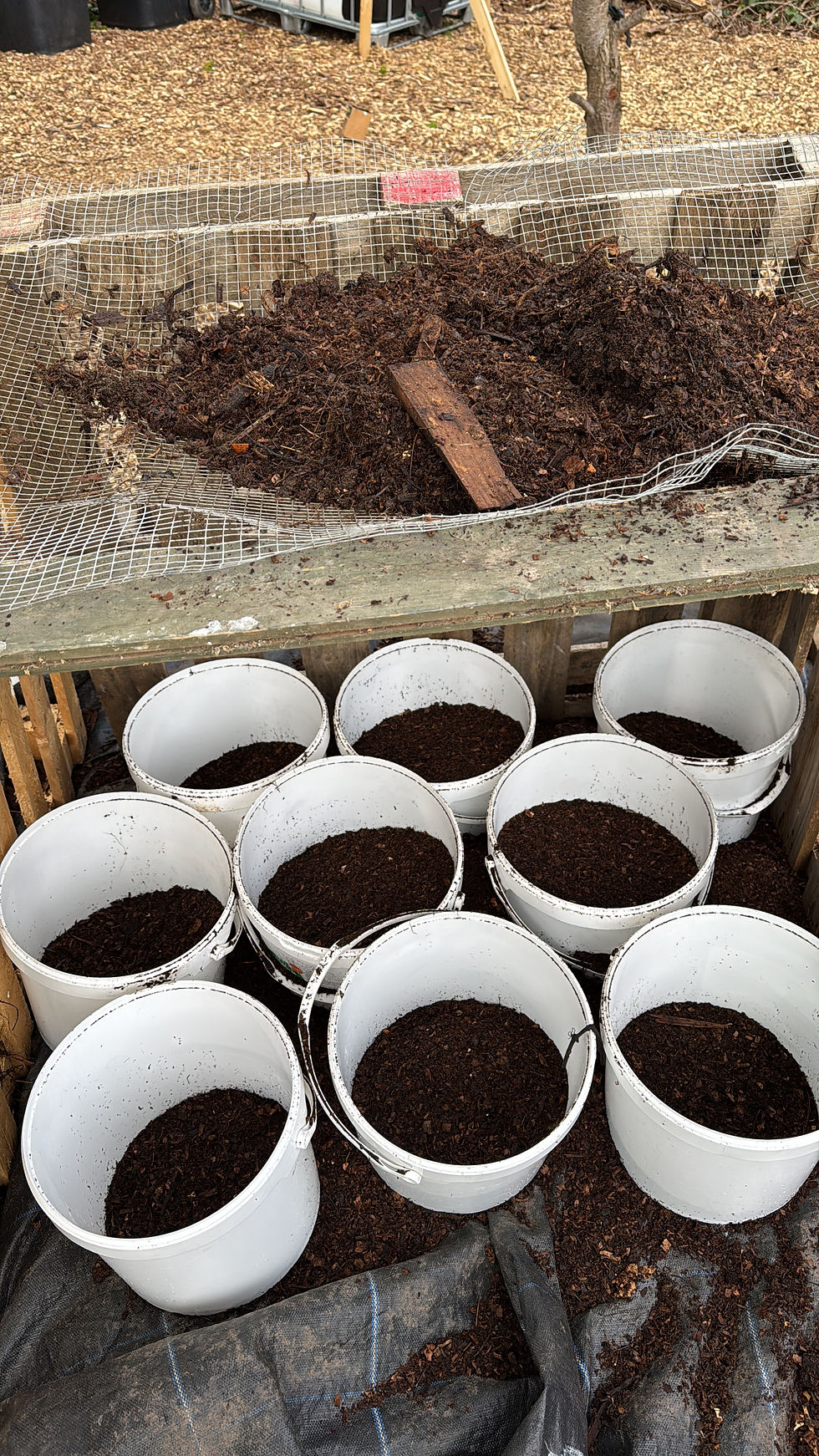
Living compost introduces diverse microbes, fungi, and organic compounds back into soil systems. It restores the biological relationships that industrial agriculture often removes.
At Generation Soil, we focus on living compost made from local food waste. Instead of nutrients leaving the city, they return to the soil that grows food again.
In Why Small-Scale Composting Creates Stronger Soil, we explored how local compost systems strengthen microbial diversity and soil structure over time.
This is not about waste management.
It is about rebuilding living ground.

Soil Health Shapes Food Systems
When soil is alive, food systems behave differently.
Healthy soils:
Retain water better during drought
Reduce flooding through improved structure
Support nutrient-dense crops
Increase biodiversity above and below ground
But the most important shift is philosophical.
When soil is understood as a living system, agriculture becomes less about extraction and more about stewardship.
Farmers become caretakers of ecosystems rather than managers of inputs.
The goal shifts from maximising yield to maintaining biological integrity.
And that shift changes everything.
Regeneration Begins With Perspective
Regenerative agriculture often focuses on techniques.
Cover crops.
No-dig systems.
Compost applications.
These practices matter.
But regeneration begins with something deeper.
Perspective.
When soil is seen as a living system, every action changes.
Disturbance is minimised.
Organic matter is valued.
Diversity becomes a strength.
The goal is no longer to control nature.
It is to collaborate with it.
A Living Foundation
Every meal begins with soil.
But most of us rarely think about the ground beneath our food.
We think about recipes, supermarkets, and supply chains.
Yet the real foundation of food systems lies underground.
If soil is treated as a disposable resource, those systems slowly weaken.
If soil is treated as a living system, those systems can regenerate.
That choice is being made every day.
In gardens.
On farms.
In compost piles.
Because the future of food does not start in factories.
It starts in living soil.
And living soil starts with care.


Comments